Eighty Years Ago the United Nations Moved Into a Skating Rink in Queens
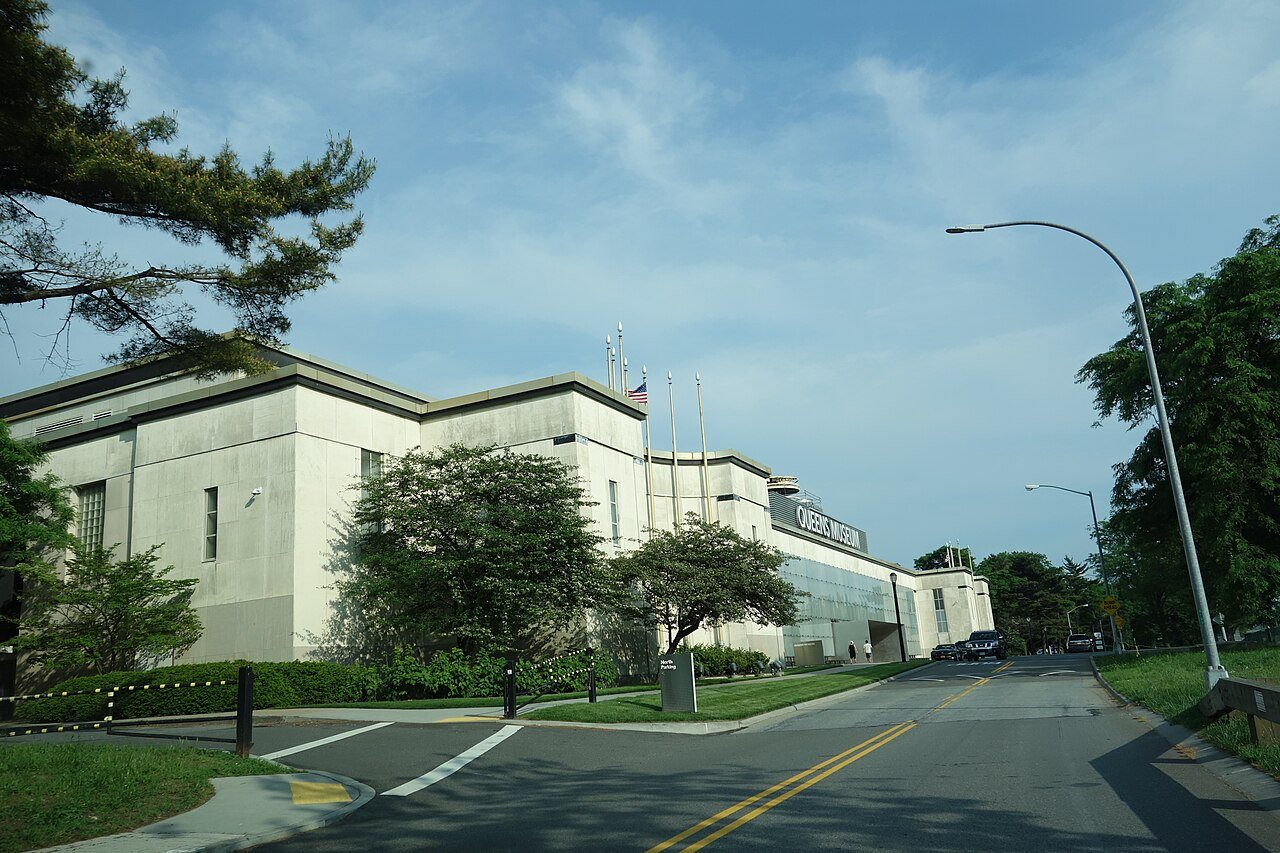
On the morning of Wednesday, 23 October 1946, the delegates of fifty-one countries filed into a low grey building beside a lake in Flushing Meadows, Queens, and sat down in a hall that had been an ice rink until the spring. President Truman arrived from Washington to welcome them.
This was the United Nations General Assembly's first meeting on American soil, and the start of a four-year stretch that the organisation's own guidebooks tend to skip. The famous tower on the East River did not exist yet. The land under it was still a row of slaughterhouses. For the moment, the parliament of the world met in a borough most of its members had never heard of, reached by subway.
A homeless organisation
The UN had been founded in San Francisco in June 1945 and had held the first half of its first Assembly session in London, in Methodist Central Hall, in January and February 1946. The London meeting settled one thing: the permanent home would be in the United States, somewhere on the East Coast. It did not settle where, and the American offers came in thick. Philadelphia, Boston, San Francisco and a stretch of Westchester and Connecticut countryside all put themselves forward. The countryside option was formally chosen and then quietly abandoned when the local residents objected to having the world on their doorstep.
In the meantime, somebody had to host the thing. The Security Council sat first in the gymnasium of Hunter College's Bronx campus, from March 1946, and then moved into part of a Sperry Gyroscope factory at Lake Success on Long Island, where it would stay until 1951. The Assembly, which needed a hall for hundreds of delegates and their staff, had nowhere at all.
New York's answer was the New York City Building in Flushing Meadows. It had been the city's own pavilion at the 1939 fair, and once the fair closed it had been given over to roller skating on one side and ice skating on the other. In April 1946 the city offered it to the UN. Contractors covered the rinks, built a raked assembly hall modelled on the Central Hall in London, and had the place ready within weeks. Robert Moses, the parks commissioner who had built the fairground on an ash dump in the first place, presented Secretary-General Trygve Lie with a golden key to the city. The key is still in the UN archives.
What got decided over the ice
It is easy to think of the Queens years as a waiting room, but a surprising amount of the modern UN was built there. In December 1946, in the first weeks at Flushing Meadows, the Assembly created the children's emergency fund that became UNICEF, and passed a resolution affirming that genocide was a crime under international law, two years before the convention that defined it. The same month it voted to keep Franco's Spain out of the UN's agencies.
Then, on 14 December 1946, it took the vote that ended its own homelessness. John D. Rockefeller Jr. had offered 8.5 million dollars to buy roughly seventeen acres along the East River in Manhattan, a district of abattoirs and tenements that a developer named William Zeckendorf had been assembling for a project of his own. The Assembly accepted within days. Zeckendorf later said he had been drinking with his wife at the Monte Carlo nightclub when the call came through. (I have never been able to confirm the nightclub, but every account of the deal includes it.)
The members had already grown by then. Afghanistan, Iceland and Sweden were admitted in November 1946, Thailand in December, and the Assembly that had opened with fifty-one flags closed the year with fifty-five.
The partition vote
The decision most people associate with the UN's early years also happened in the rink. On the afternoon of 29 November 1947, delegates at Flushing Meadows voted thirty-three to thirteen, with ten abstentions, to partition Palestine into a Jewish state and an Arab state with Jerusalem under international control. The galleries were packed and the vote was broadcast live on radio. Britain, which held the mandate, abstained. The Arab delegations walked out.
Eighteen months later, on 11 May 1949, the same hall admitted Israel as the UN's fifty-ninth member. Between those two votes the Assembly had left Queens for a season: the autumn 1948 session met in Paris, at the Palais de Chaillot, which is why the Universal Declaration of Human Rights, adopted on 10 December 1948, is a Paris document and not a New York one.
Korea's first steps toward division were debated at Flushing Meadows too, in November 1947, when the Assembly called for elections under UN supervision that in the end were held only in the south.
Living in Queens
Delegates did not love the arrangement. The building was a long ride from the Manhattan hotels where most of them lived, and the Secretariat staff were out at Lake Success, so the UN's working day involved a great deal of driving across Long Island. Visitors came anyway, by the thousand, and the Queens parks department found itself running tours of an international parliament.
The Americans, who had wanted the UN on their soil as proof that the country would not retreat into isolation as it had after 1919, treated the Queens interlude as a show of hospitality rather than an embarrassment. Truman came back on 24 October 1949 to lay the cornerstone of the Manhattan headquarters, almost exactly three years after his welcome speech.
The move to Manhattan
The Secretariat tower, the thin glass slab designed by a committee that included Le Corbusier and Oscar Niemeyer and tidied into buildable form by Wallace Harrison, was occupied through 1950 and 1951. The Assembly held its last Flushing Meadows session in the autumn of 1950 and moved into its own domed hall in Manhattan when that was finished in 1952. Lake Success stayed in the history books a little longer, because the Security Council took its first vote on Korea there in June 1950. The Sperry plant is long gone.
What the rink looks like now
The organisation that left Queens is in rougher shape than the one that arrived. Last autumn Secretary-General António Guterres told the Assembly's budget committee that the UN was in "a race to bankruptcy," with member states' arrears running to hundreds of millions of dollars, and he proposed a 2026 regular budget about fifteen percent smaller than the year before, with more than two thousand posts cut.
The building it left behind went back to the city, hosted the 1964 World's Fair, and in 1972 became the Queens Museum. Its best-known exhibit is the Panorama of the City of New York, a scale model of all five boroughs covering more than nine thousand square feet, which Moses commissioned for the 1964 fair. The museum notes the UN years in its displays, and the hall where the partition vote was taken is now a gallery. The lake is still there. So is the Unisphere, which did not exist when the delegates arrived.