Why October Is the Tenth Month, and Why Two Emperors Could Not Rename It
Every October somebody in a pub quiz points out that the name means "eighth", and that November and December mean ninth and tenth, and everybody nods and moves on to the next question. It is a good question, though, and the answer is odder than the usual one-line explanation.
The short version is that the Romans once began their year in March. The longer version involves a calendar with a sixty-day hole in it, a dictator who gave one year 445 days, and some emperors who put their own names on the autumn months and had them scrubbed off again the moment they were dead.
A year with a hole in it
The earliest Roman calendar, the one tradition credits to Romulus, had ten months and only 304 days. It began in March (Martius, for Mars, the god of war, because March was when the campaigning season opened) and ran through April, May, June, and then six months that were simply numbered: Quintilis, Sextilis, September, October, November, December. Fifth through tenth. After December there was a gap of roughly sixty days in the dead of winter that the calendar did not name at all, because nothing happened then that a farmer or a general needed to count.
We know this mostly from Roman writers who were themselves looking back several centuries (Ovid, Plutarch, later Macrobius), and modern historians treat the details with some suspicion. A calendar that just stops for two months sounds like the kind of thing a later author invents to make his ancestors look charmingly primitive. But the numbered names are real and very old, and they only make sense if March was once the first month.
The second king of Rome, Numa Pompilius, is credited with filling the hole. He is said to have added January (for Janus, the two-faced god of doorways and beginnings) and February (from februa, the purification rites held that month) to the end of the year, bringing it to 355 days. That is still ten days short of a solar year, so the priests inserted an extra month every couple of years to catch up. They were not always diligent about it.
When January moved to the front
At some point, and the sources disagree on exactly when, the Romans began counting the civil year from January rather than March. The date usually given is 153 BC, when the consuls, the two annually elected heads of state, started taking office on 1 January instead of 15 March. The reason was practical: a rebellion in Spain needed a commander in the field sooner, and moving the start of the political year moved the start of the calendar with it.
Nobody renamed the months. September stayed "seventh" while sitting ninth, and so on down the line. The Romans were conservative about religious matters and the names of months were, strictly, religious matters. So the mismatch that people notice every autumn has been there for more than two thousand years, and it was already a slightly embarrassing fossil when Julius Caesar came to power.
Caesar's year of 445 days
By the 40s BC the calendar was a mess. The priests in charge of the catch-up month had been inserting it for political reasons, lengthening years when their friends held office and skipping it when their enemies did, and the civil calendar had drifted about three months from the seasons. Harvest festivals were falling in what the sky said was early summer.
Caesar, who held the office of pontifex maximus and so was technically in charge of the thing, brought in the Alexandrian astronomer Sosigenes and did what nobody before him had the authority to do. He set the year at 365 days, added a leap day every fourth year, and spread the extra days across the months to give them the lengths they still have. To reset the drift he made 46 BC last 445 days, with two extra months shoved in between November and December. Romans called 46 BC the year of confusion. The system that came out of it is the Julian calendar.
He did not touch the month names. That was done for him after his death, in 44 BC, when the senate renamed Quintilis, his birth month, Julius. (Caesar had been murdered that March and never lived through a July.) In 8 BC the senate did the same for his heir, and Sextilis became Augustus.
Two emperors who tried it and failed
With two months named after rulers and four still numbered, the obvious next step was for every emperor to grab one. Several tried. Caligula is reported to have renamed September "Germanicus" after his father. Nero renamed April "Neroneus". Domitian, at the end of the first century AD, went further than anyone: he renamed September Germanicus (he had taken the title himself) and October, his birth month, Domitianus.
For a few years Roman documents were dated in the month of Domitianus. Then, in September of AD 96, Domitian was stabbed to death by a palace servant, the senate declared his memory damned, his name was chiselled off public inscriptions, and the months quietly went back to being numbers. The same thing happened to Commodus a century later, who renamed all twelve months after his own titles and was strangled in his bath before anyone outside the court had got used to it.
There is a lesson here that the Romans clearly understood: a month name only sticks if the man it honours is dead and safely deified by the time the next ruler arrives. Julius and Augustus qualified. Nobody else ever did, which is why the calendar hangs on to two names from the first century BC and six numbers from somewhere around the eighth.
The ten days that vanished in 1582
The Julian calendar had one flaw, and it took sixteen centuries to matter. A leap day every four years makes the average year 365.25 days, which is about eleven minutes too long. Eleven minutes a year is three days every four centuries, and by the sixteenth century the spring equinox, which the church used to fix the date of Easter, had slid ten days earlier than the calendar said it should be.
Pope Gregory XIII's reform of 1582 fixed the leap-year rule (century years are leap years only if divisible by 400) and deleted ten days to put the equinox back where the Council of Nicaea had expected it in AD 325. In the Catholic countries that adopted it at once, Thursday 4 October 1582 was followed by Friday 15 October. Protestant countries refused to take instructions from a pope and kept the old calendar for generations. Britain and its colonies did not switch until 1752, by which time the gap was eleven days, and Wednesday 2 September was followed by Thursday 14 September. George Washington, born on 11 February by the old reckoning, spent the rest of his life with a birthday on 22 February.
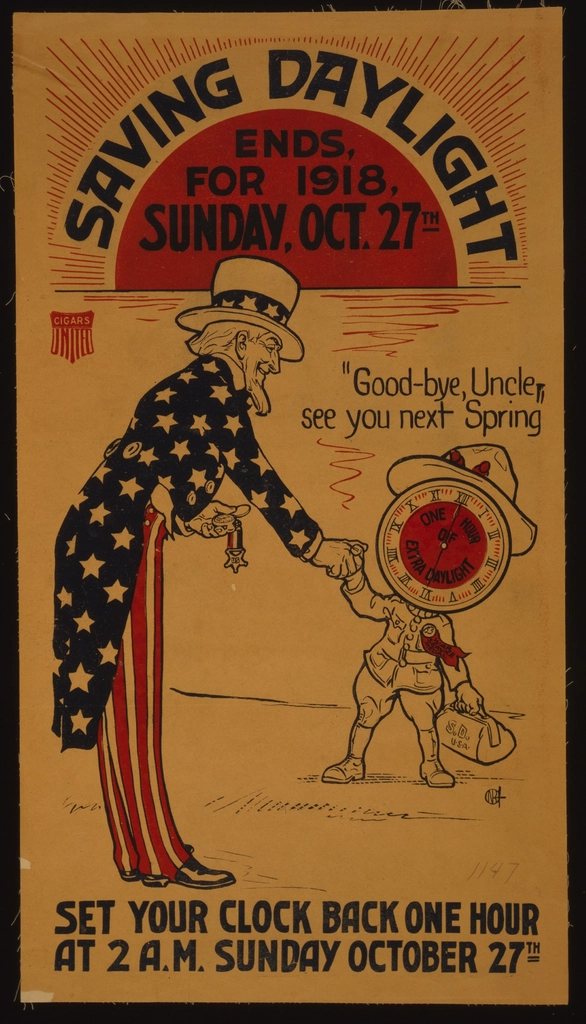
Russia held out until 1918, which is why the "October Revolution" of 1917 is commemorated on 7 November. Greece did not change its civil calendar until 1923.
Where the old calendar still runs
The Julian calendar is not quite dead. Most Orthodox churches still use it to calculate Easter, which is why Orthodox Easter usually falls a week or more after the Western date, and the Russian, Serbian and Georgian churches use it for the fixed feasts too, so Christmas there falls on 7 January. The gap between the two calendars is now thirteen days and becomes fourteen in 2100.
Mount Athos, the monastic peninsula in Greece, keeps Julian time entirely, and some of its monasteries still use the Byzantine clock, which resets to zero at sunset. (Arranging to meet anyone there must be an adventure.)
October, meanwhile, keeps the name it was given when it came eighth. Nobody has tried to change it since Domitian, and on the evidence I would not advise it.