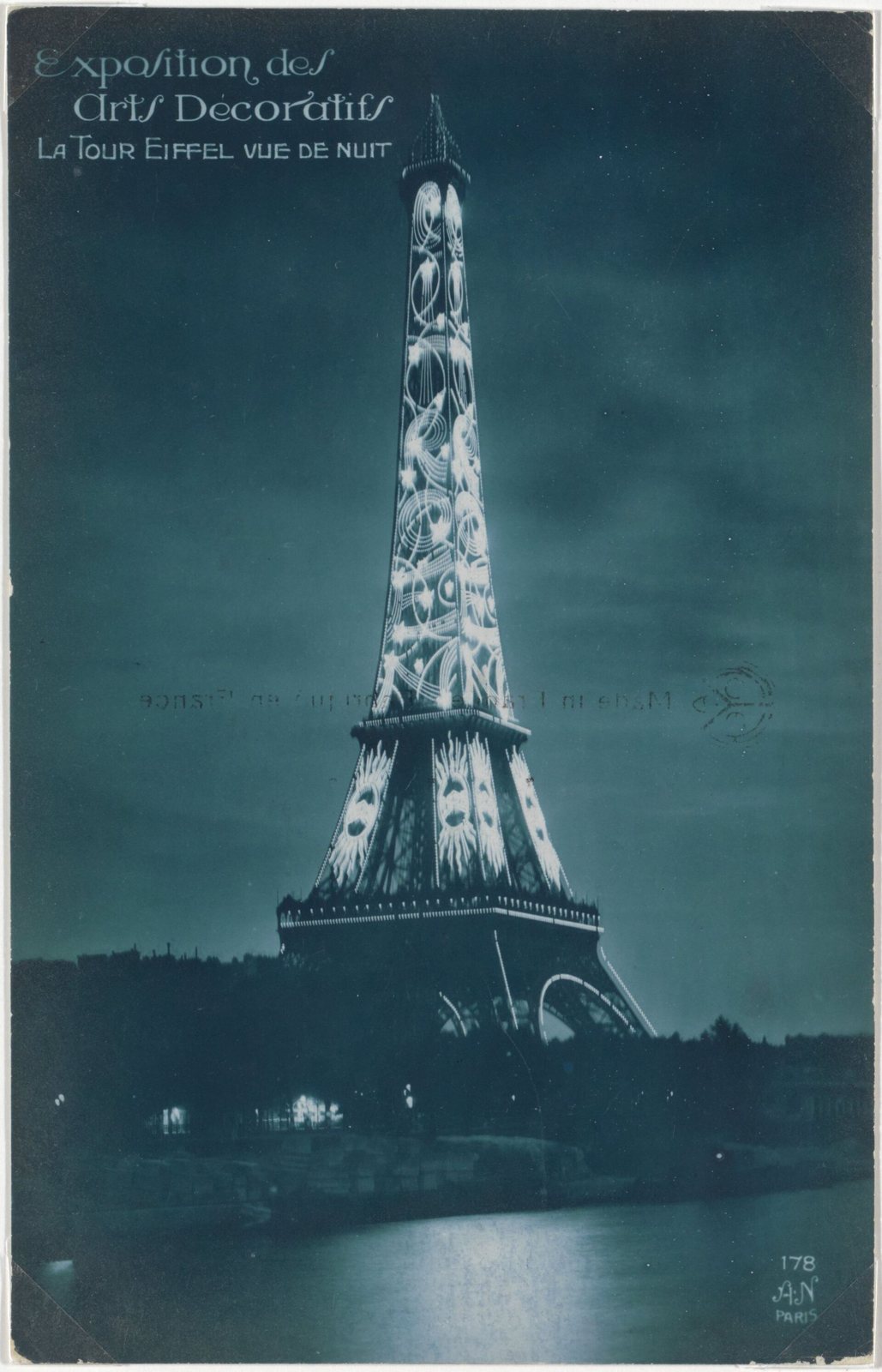
In the spring of 1925 the Eiffel Tower was thirty-six years old, rusting, and expensive to maintain. It had been built as a temporary attraction for the 1889 World's Fair, and plenty of Parisians still regarded it as an eyesore that had overstayed its welcome. Newspapers ran stories about the cost of repainting it and asked whether the city might be better off without it.
One of the people reading those stories was a smooth, multilingual Austro-Hungarian émigré who called himself Count Victor Lustig. He had already made a career out of selling things that did not work, including a "money box" that supposedly printed hundred-dollar bills. The tower, he decided, was the biggest thing he had ever seen that nobody seemed to want.
Within a few weeks he had sold it to a scrap dealer. Seven thousand tons of iron, a deposit, and a bribe on top.
A forged letterhead and a suite at the Crillon
Lustig's first move was to have stationery printed bearing the name of the Ministry of Posts and Telegraphs, the government department that was actually responsible for the tower. Then he took a suite at the Hôtel de Crillon on the Place de la Concorde, one of the grandest addresses in Paris, and sent letters to six of the city's leading scrap-metal dealers inviting them to a confidential meeting.
When they arrived he introduced himself as a deputy director-general of the ministry. The tower, he explained, had become too costly to maintain, and the government had decided, quietly, to have it dismantled and sold for scrap. The decision was politically sensitive, which was why the matter had to stay secret until the contract was signed. He took the dealers on a tour of the tower in a hired limousine, pointing out the rust, and asked for sealed bids.
None of it was hard to believe. The ministry existed, the maintenance problem had been in the papers for months, and a civil servant asking for discretion was what a businessman in 1925 expected to meet.
Choosing the right victim
Lustig did not want the most experienced dealer in the room. He wanted the one most eager to belong. According to the accounts of the case that circulated afterwards, he picked André Poisson, a dealer who had done well in the provinces and was anxious to establish himself among the Paris establishment.
Poisson's wife was suspicious of the rushed, secretive negotiation. Lustig dealt with that in the way that made the swindle famous. He arranged a private meeting with Poisson and confessed that, as a poorly paid civil servant, he was expected to be looked after by the winning bidder. In other words, he asked for a bribe.
That request convinced Poisson. A fraudster would want the sale price; a corrupt official would want a kickback. Poisson handed over the money for the contract plus a substantial bribe on top. Lustig and his accomplice, an American grifter named Dan Collins, left for Vienna with a suitcase of cash.
The silence that protected him
The clever part of the scheme was what happened next, which was nothing at all. Lustig waited in Vienna for news of a scandal. None came. Poisson had realised he had been cheated, but the thought of explaining to the police, and to the newspapers, that he had bought the Eiffel Tower from a stranger in a hotel room was more than he could bear. He kept quiet and absorbed the loss.
Lustig, by his own later account, read the French papers every day and found no mention of the affair. So he returned to Paris and tried to sell the tower again, to a second group of dealers.
This time the buyer went to the police before paying. Lustig and Collins got out of France ahead of an arrest warrant and sailed for the United States. If he had been content with one sale, the story would probably never have come out.
From the tower to the Treasury
In America Lustig's talent found a larger stage. He is said to have talked Al Capone out of fifty thousand dollars, kept it untouched in a safe-deposit box for two months, and returned it in full with an apology that the "deal" had fallen through. Capone, impressed by the honesty, gave him a reward. Lustig walked away with five thousand dollars for doing nothing except appearing trustworthy.
His last and largest operation was counterfeiting. Working with a chemist and an engraver, he produced forged hundred-dollar bills of such quality that the Secret Service considered them a threat to confidence in the currency itself. He was arrested in New York in May 1935 after a tip-off, escaped from the Federal Detention Headquarters by climbing down a rope of bedsheets, and was recaptured in Pittsburgh a month later.
He pleaded guilty, was sentenced to twenty years, and was sent to Alcatraz. He died in the prison hospital at Springfield, Missouri, in 1947. The death certificate listed his occupation as "apprentice salesman".
The commandments of a swindler
Lustig is usually credited with a list of "Ten Commandments for Con Men" that circulated after his death. I have never seen a convincing source for it, and it reads as if a journalist tidied it up, but it does describe how he worked: listen more than you talk, never look bored, let the other man tell you his politics and his religion and then agree with him, and never be drunk or untidy.
None of the Eiffel Tower affair needed a mastermind. He did not pick a lock or forge a deed. He had good stationery printed, rented an expensive room, and told a story people were already half-telling themselves. The bribe did the rest. Once Poisson had paid a government official under the table he had a secret of his own to protect, which is why he never went to the police.
What the tower is for now
The Eiffel Tower was never seriously going to be scrapped in 1925. Its radio antenna had made it strategically useful during the First World War, and by the 1920s it was already the symbol of Paris that it remains today, repainted every seven years and visited by more than six million people a year.
The scheme has aged better than the tower's paintwork. Anyone who has had a phone call from a "tax office" demanding immediate payment, or an email from the boss asking for an urgent transfer and absolute discretion, has met Lustig's method with the hotel suite taken out. The institution is real, the secrecy has a reason, and the person who pays would rather lose the money than explain how. A hundred years on, that last part still does most of the work.
Enjoyed this story?Get a new one every day on social.